Find Lot Size by Address
Search an address, see the property from above, and measure the full lot in square feet, square metres, acres, or hectares using satellite imagery and parcel boundaries when available.
Opens the free measurement tool. No sign-up to start.
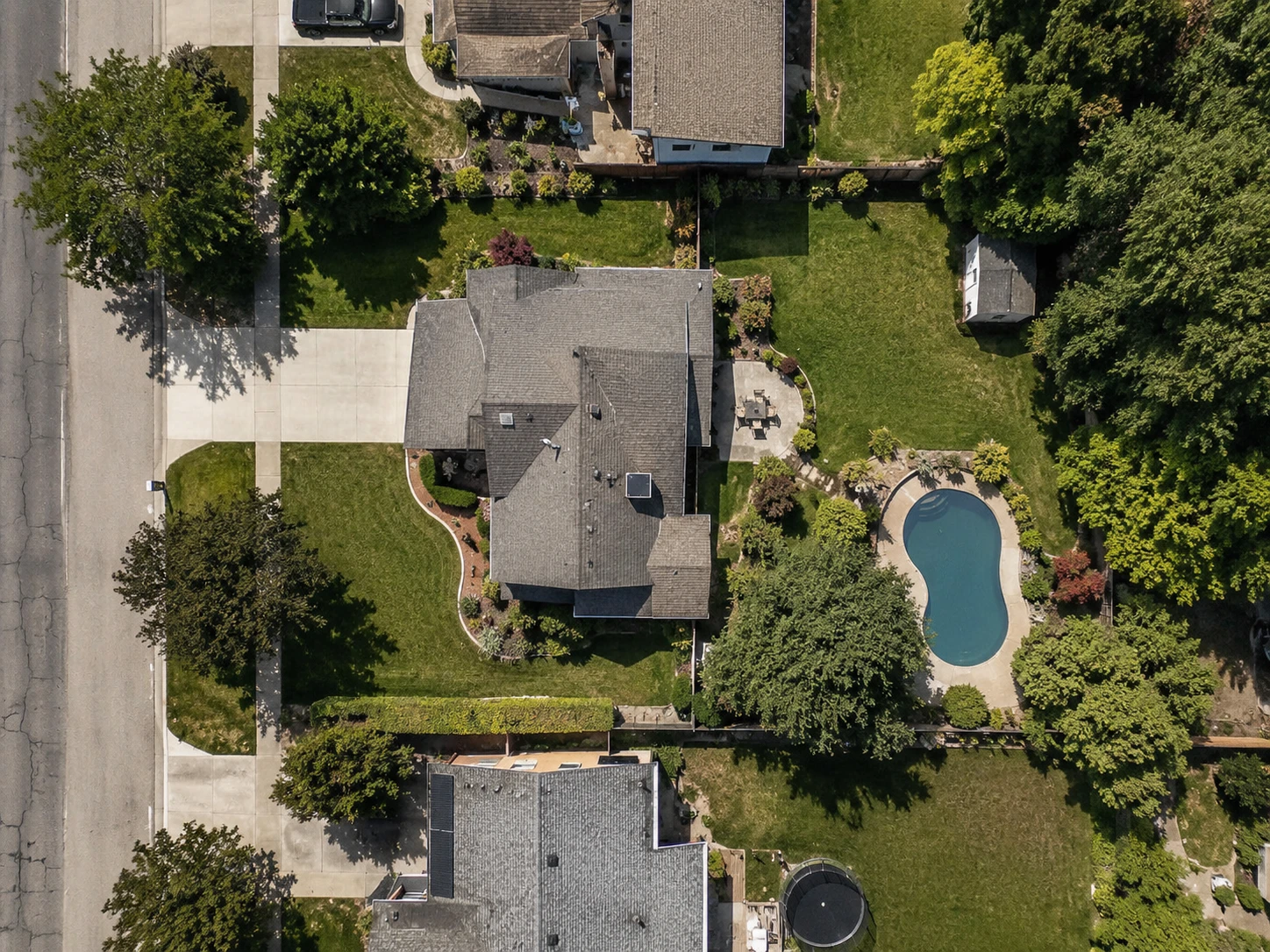
Lot size is the total area of the land within a property’s boundaries. Search the address, review the property from above, and trace the lot to calculate its area. The result can be shown in square feet, square metres, acres, or hectares.
Your lot is more than the lawn.
When a property listing says the lot is 10,000 square feet (about 929 m²), it is talking about the land inside the property boundary. The house, driveway, patio, landscaping, and lawn can all sit inside that same 10,000 square feet.
That is why measuring only the grass or multiplying the dimensions of the house will not give you the lot size. You need the outside boundary of the property. For supported U.S. properties, the recorded lot size may also be shown when you search the address.
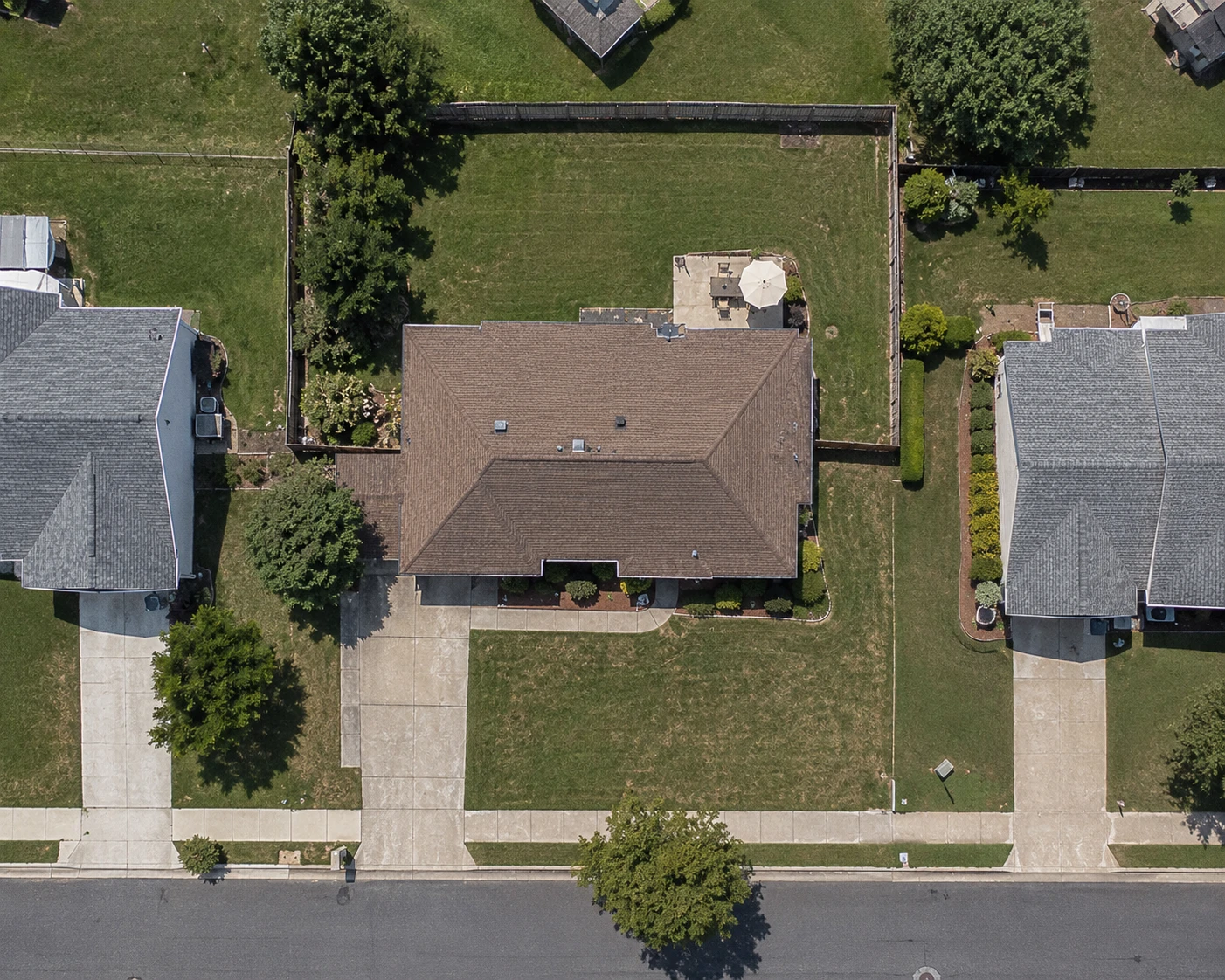
From an address to a measured lot.
Search the address
Enter the street address and open the property in FindPropertySize.
Choose the clearest view
Review the available satellite imagery and use the view that makes the property easiest to trace.
Check the parcel boundary
Turn on parcel boundaries when coverage is available. They can provide useful context for where the parcel begins and ends.
Trace the lot
Add points around the outside of the property and adjust them until the measured area follows the boundary you intend to measure.
Read the total
FindPropertySize calculates the area as you trace, including square footage and acreage.
A fence is not always the property line.
From above, a fence, hedge, driveway edge, or row of trees can look like an obvious property boundary. Sometimes it is. Sometimes it is not.
Parcel overlays can make the property easier to understand, especially when the physical boundary is not obvious in the imagery. But parcel map lines are reference data, not a replacement for a boundary survey.
Parcel line overlays are currently available for properties in the U.S. and Canada. Measuring works anywhere in the world.
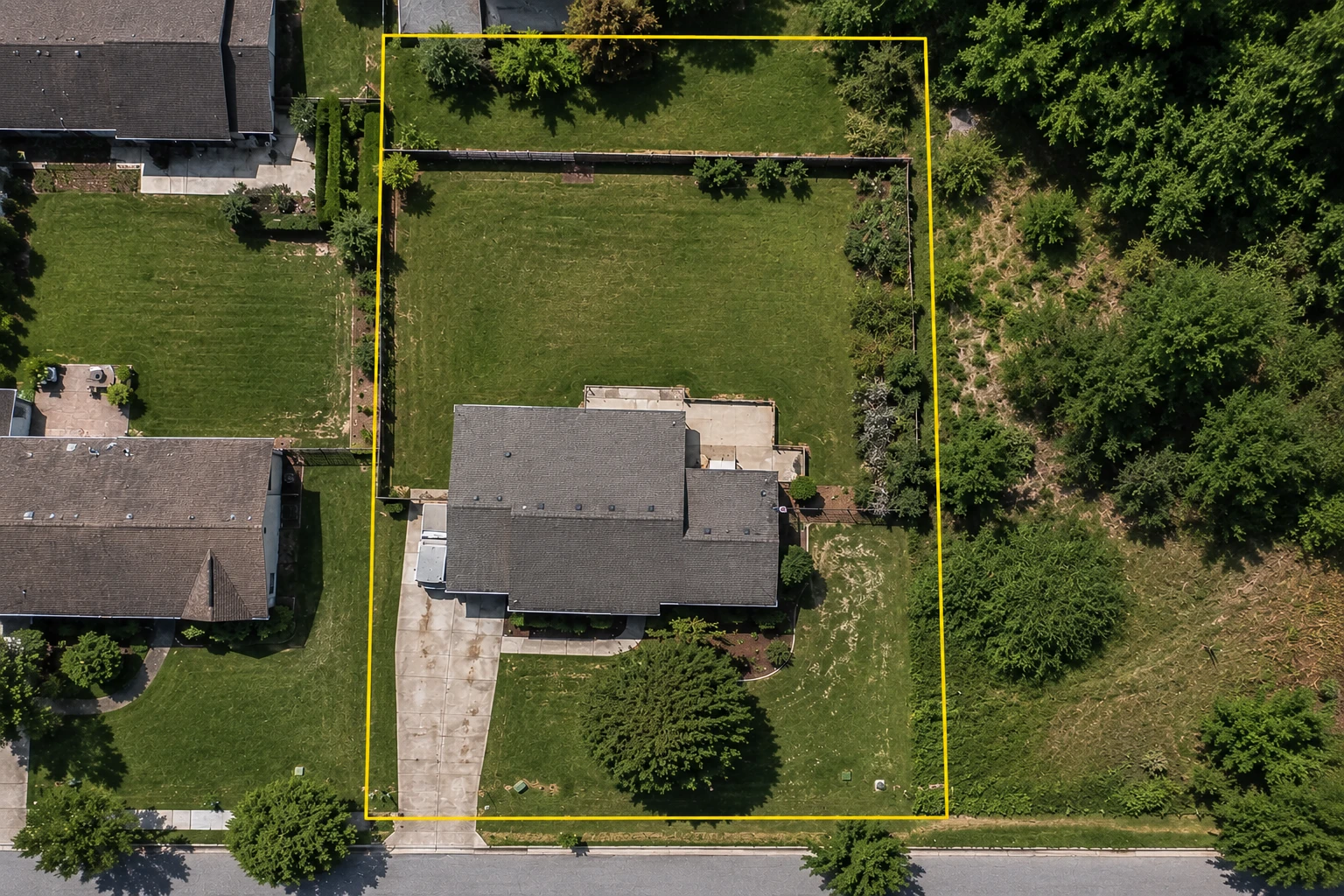
- 1Parcel boundary
- 2Fence
- 3Visible yard edge
Planning a project on or near the boundary?
Use a recorded plat, official property records, or a licensed surveyor when the exact legal boundary matters. Satellite measurement is best used for estimating, planning, and understanding the property from above.
Four measurements that are easy to mix up.
| Measurement | What it means | Example |
|---|---|---|
| Lot size | The total land area inside the property boundary. | 10,000 sq ft |
| House square footage | Usually the interior living area of the home. | 2,100 sq ft |
| Lawn size | Only the grass or turf areas you want to measure. | 6,400 sq ft |
| Lot dimensions | The lengths of the lot’s sides, such as frontage and depth. | 80 ft × 125 ft |
Two properties can have the same lot size and completely different shapes. An 80-by-125-foot rectangle is 10,000 square feet, but an irregular corner lot could have the same total area with very different dimensions.
There is more than one place to check.
For a quick estimate, satellite measurement is often the easiest place to start. When the number matters for records, a purchase, or a boundary decision, it can be worth checking another source too.
| Method | Best for | Keep in mind |
|---|---|---|
| Satellite measurement | Fast estimates, planning, and measuring from home | You still need to identify the boundary you want to trace |
| County assessor or GIS | Recorded parcel information and property research | Every county uses a different website and interface |
| Real-estate listing | A quick reference while browsing homes | The number may come from another source and can be outdated or incorrect |
| Plat or survey | Projects or decisions where the legal boundary matters | A survey is different from an online map measurement |
If two sources disagree, do not assume the number that looks most convenient is the right one. Check the parcel record, plat, deed, or survey appropriate to what you are trying to do.
Convert lot size between square feet and acres.
Lot sizes are commonly listed in square feet for smaller residential properties and acres for larger ones in the U.S., while square metres and hectares are the usual units almost everywhere else. One acre equals 43,560 square feet, about 4,046.86 square metres, or 0.4047 hectares.
The converter below works in either system. It reads square feet, square metres (square meters), square yards, acres and hectares, and converts between any two of them.
Why know the lot size in the first place?
Property research
Compare the land that comes with a home instead of relying only on the house square footage shown in the listing.
Project planning
Get the scale of the property before planning landscaping, fencing, drainage, outdoor improvements, or other work.
Contractor estimates
Start with the property from above, then measure the exact lawn, driveway, roof, beds, or other area needed for the job.
Lot size questions
How do I find lot size by address?
Search the property address, open the satellite view, and measure around the outside boundary of the lot. FindPropertySize calculates the enclosed area in square feet and acres as you trace.
Is lot size the same as property size?
In everyday residential use, the terms are often used to mean the total area of the parcel or lot. “Property size” can be less specific, though, so check whether a source is referring to the land, the house, or both.
Is lot size the same as lawn size?
No. Lot size includes the full property area inside the boundary. Lawn size includes only the grass or turf you choose to measure. A house, driveway, patio, pool, and planting beds can all be inside the lot without being part of the lawn.
How many square feet are in an acre?
One acre contains 43,560 square feet, which is about 4,046.86 square metres or 0.4047 hectares. A 10,000-square-foot lot is about 0.23 acres, while 21,780 square feet is exactly half an acre.
Can I measure lot size in square metres or hectares?
Yes. FindPropertySize measures in both metric and imperial units, and the unit the result is shown in can be changed in the measurement tool. The same traced lot can be read as square feet, square metres, acres or hectares without measuring it again.
Are parcel lines on a map the exact legal property lines?
Not necessarily. Parcel overlays are useful reference data, but online parcel lines can be offset from visible features or differ from a surveyed boundary. Use official records, a recorded plat, or a licensed surveyor when the exact legal boundary matters.
Why can lot-size numbers be different on different websites?
Different sites may pull from different records, update on different schedules, or calculate the number in different ways. If a listing, assessor record, map measurement, and survey disagree, check the source behind each number before relying on it.
Can I measure an irregular lot?
Yes. You do not need a rectangular property. Add points around corners and changes in direction so the measurement follows the shape of the lot.
Related tools and resources
Want to know how big the lot is?
Search the address and measure the property from above.
Free to start. No credit card required.